
Medical Device Vision Inspection Selection Guide
Choose medical device vision inspection by comparing your parts, process, rate, access, data needs and required results.
Compare optical concepts against a defined visible decision using good, bad and marginal medical-device assemblies. Review presentation, lighting, production speed and false-accept and false-reject criteria. Agree sample coverage and challenge evidence before confirming detection capability; appearance checks alone do not demonstrate device function.
For in-line inspection using medical-device assembly visual checks, a short trial that reproduces the difficult condition is often more useful than a long list of nominal specifications.
Compare options in the conditions where they must work — Medical Device Vision Inspection
Plan medical device vision inspection around representative good, bad and marginal samples, line presentation, lighting, reject handling and challenge criteria. Discuss an optical feasibility trial with Oxford Vision Systems. A useful shortlist should show how every option copes with visible defect or measurement definition for medical-device assembly visual checks and recipe, reject and line-control interfaces.
Discuss your application
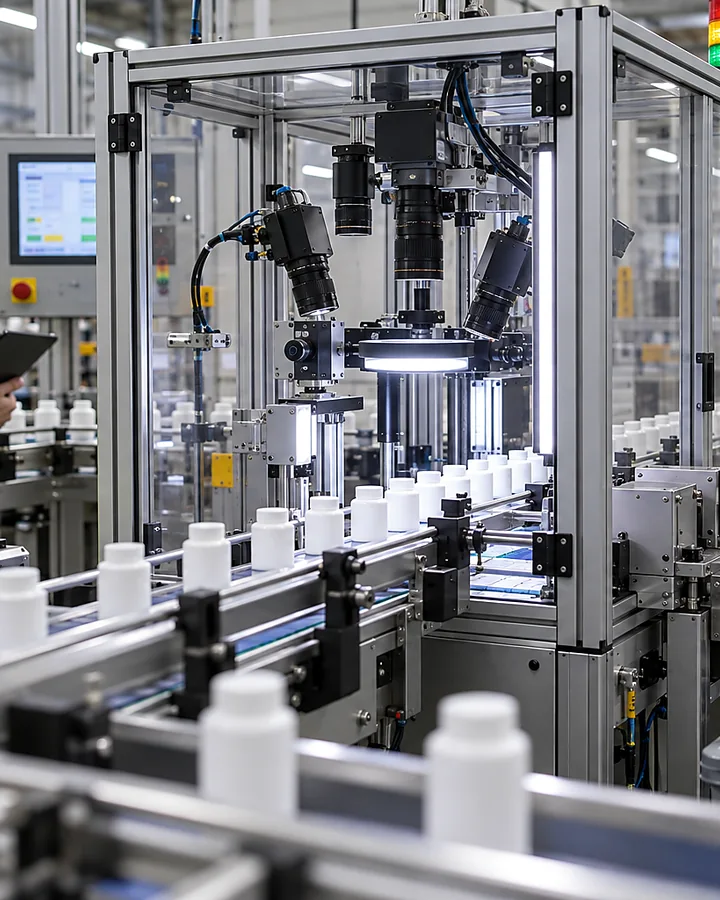
Select an inspection that answers the approved assembly question
Build the comparison around specific visible assembly conditions and the manufacturer’s approved quality process. A camera can supply evidence about an observable feature; it cannot, by itself, establish the device’s clinical performance or release status.
Choose the inspection stage before the algorithm
List the features needed to judge the assembly: an insert, a visible seal position, an orientation mark or a defined gap. Find the stage where each is exposed and stable. Inspecting earlier may avoid an occlusion, but the process must then preserve the identity and status of that assembly through later operations.
Separate development samples from challenge evidence
A sample used to adjust a threshold is useful for development. Agree separately which examples will challenge the completed setup, who classifies them and how marginal decisions are resolved. Include permitted suppliers, finishes and fixture variation. Describe the sample coverage in the result record instead of presenting a small favourable trial as a universal detection claim.
Compare the work required after a product change
Ask what must change when a device variant, material or fixture is revised. The answer may include views, reference images, limits and result records as well as a recipe name. Decide who reviews each change and what evidence is needed before production resumes. An accessible settings screen does not replace a controlled approval process.
Specify the meaning of an unavailable result
Define the response to a missing image, wrong recipe, failed part identification or uncertain classification. Keep those states distinct from an accepted inspection. Follow a known challenge assembly through the actual hold or reject route, then confirm the recorded decision remains associated with it. Use the device inspection checklist to document responsibility for the optical scope, validation activities and release decision.
Pause before choosing when…
- Only perfect or hand-selected examples of in-line inspection using medical-device assembly visual checks are available.
- No one has defined how false-accept, false-reject and challenge criteria will be evaluated.
- The normal range for visible defect or measurement definition for medical-device assembly visual checks is described only as “usually fine” but has not been bounded.
- Your operator, cleaning, maintenance or recovery access has not been considered.
- Quoted performance depends on another machine or data source that is not included.