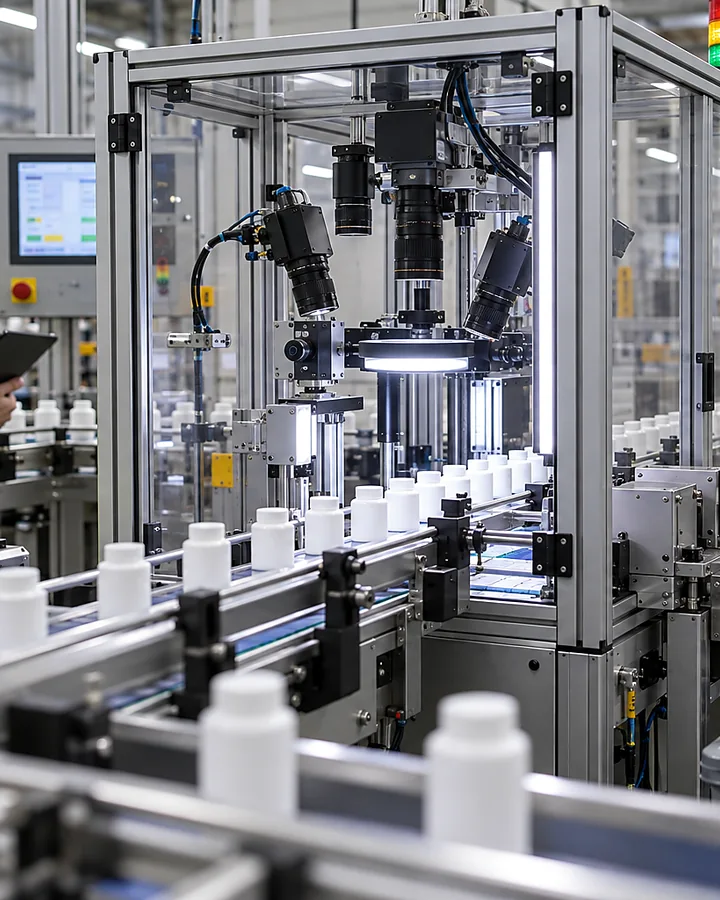
Visible Defect or Measurement Definition for Medical-Device Assembly Visual Checks: Defect and sample study
Define an assembly vision check with an approved visible feature, view and acceptance boundary, sample classifications, production variation and explicit optical exclusions.
In brief
Name the visible component, orientation, gap, mark or assembly feature and the view needed to judge it. Have the responsible quality team approve acceptable, defective and uncertain classifications and the acceptance boundary. Supply normal variation and marginal defects, and state which required properties or hidden areas cannot be assessed optically.
Follow the complete inspection sequence and agree the independent challenge evidence. Do not treat an unrelated visible proxy as proof of a hidden feature. Optical feasibility and the manufacturer's product-validation and release decisions remain separate responsibilities.
On the production floor
Turn your production information into clearer decisions — Medical Device Vision Inspection
Plan medical device vision inspection around representative good, bad and marginal samples, line presentation, lighting, reject handling and challenge criteria. Discuss an optical feasibility trial with Oxford Vision Systems. Use this guide to resolve visible defect or measurement definition for medical-device assembly visual checks before it limits the final system.
Visible Defect or Measurement Definition for Medical-Device Assembly Visual Checks: condition, range and effect on your process
Current condition
Record the visible feature, inspection stage and acceptance boundary with approved sample classifications, current fixture/presentation, lighting and recipe. Identify the responsible quality/engineering roles and any hidden or unobservable requirement.
Realistic range
Include permitted variants, finishes, fixture movement, glare, occlusion and timing with known defects and marginal assemblies. Distinguish samples used for development from the agreed challenge set, recording coverage and exclusions.
Effect on the system
Show how the visible decision affects recipe selection, device/carrier-linked results and the hold/reject route. Define the response to missing or uncertain results, changes requiring review and the retained evidence needed by the responsible manufacturer.
Before you contact us
Five questions about visible defect or measurement definition for medical-device assembly visual checks for your application
Who can confirm this information?Identify the manufacturer's responsible quality and engineering roles for feature classifications, acceptance boundaries, sample coverage, recipe changes and review of retained evidence.
How representative is the sample?Include approved good, defective and marginal assemblies with permitted variant, supplier/finish and fixture variation; state whether samples were used for development or independent challenge.
What is the difficult condition?Include a near-boundary visible defect, glare or partial occlusion and the agreed missing-image, wrong-recipe, failed-processing or unconfirmed-reject cases.
How will you judge the result?Compare approved expected classifications with observed decisions, record false accepts/rejects and exclusions, and verify that the correct device or carrier follows the required disposition route.
What else must be coordinated?Coordinate views/lighting/timing, fixture access, variant recipes, settings permissions, device/result association, hold/reject response and the manufacturer's separate validation and release responsibilities.
Connected details
Review visible defect or measurement definition for medical-device assembly visual checks as part of the complete system
Question 1
Visible Defect or Measurement Definition for Medical-Device Assembly Visual Checks
For Visible Defect or Measurement Definition for Medical-Device Assembly Visual Checks: Defect and sample study, describe the current position, required outcome, acceptable limits and known exceptions for visible defect or measurement definition for medical-device assembly visual checks. That lets us compare options against your real production rather than one nominal value.
Question 2
Good, Bad and Marginal Sample Range
For Visible Defect or Measurement Definition for Medical-Device Assembly Visual Checks: Defect and sample study, describe the current position, required outcome, acceptable limits and known exceptions for good, bad and marginal sample range. That lets us compare options against your real production rather than one nominal value.
Question 3
Part Presentation and Production Speed
For Visible Defect or Measurement Definition for Medical-Device Assembly Visual Checks: Defect and sample study, describe the current position, required outcome, acceptable limits and known exceptions for part presentation and production speed. That lets us compare options against your real production rather than one nominal value.
Question 4
Optics, Lighting and Environmental Conditions
For Visible Defect or Measurement Definition for Medical-Device Assembly Visual Checks: Defect and sample study, describe the current position, required outcome, acceptable limits and known exceptions for optics, lighting and environmental conditions. That lets us compare options against your real production rather than one nominal value.
Question 5
Recipe, Reject and Line-Control Interfaces
For Visible Defect or Measurement Definition for Medical-Device Assembly Visual Checks: Defect and sample study, describe the current position, required outcome, acceptable limits and known exceptions for recipe, reject and line-control interfaces. That lets us compare options against your real production rather than one nominal value.
Question 6
False-Accept, False-Reject and Challenge Criteria
For Visible Defect or Measurement Definition for Medical-Device Assembly Visual Checks: Defect and sample study, describe the current position, required outcome, acceptable limits and known exceptions for false-accept, false-reject and challenge criteria. That lets us compare options against your real production rather than one nominal value.